AI/ML Professional · Research Scientist
Dr. Ahmed Moussa
Predictive Intelligence for Risk and Resilience in Complex Systems
Impact Across
Climate · Infrastructure · Logistics & Supply Chains · Advanced Air Mobility · Project & Asset Management
What I Build
Intelligence that holds up in the real world
Every system here was built under one constraint: it has to work when it matters.
Applied ML Systems
Early warning that converts into action
Deep learning on geospatial time series to forecast flood and wildfire hazard, and to predict accident risk in drone-based hazmat logistics, deployed as cloud pipelines.
NSE 89% flood forecasting · ~38% better wildfire prediction · R² 0.95 drone risk prediction
Agentic AI Systems
Multi-step work completed autonomously
Autonomous research agents, hierarchical coordination pipelines, and retrieval-grounded assistants that cite their sources. These finish tasks end to end rather than answering one question at a time.
7 coordinated agents · multi-round research · hours of desk work compressed into one run
Production ML & MLOps
Models that keep working after launch
Drift detection that triggers automatic retraining, CI/CD that ships to containers, and orchestrated pipelines on Vertex AI — the work that keeps a model accurate long after launch.
~40% faster deployment cycles · automated retraining · fewer maintenance hours
Research & Open-Source Tooling
Methods and code that survive peer review
Peer-reviewed work on graph-theoretic risk modeling and optimization-augmented ML, plus three open-source Python packages in active use by practitioners worldwide.
7+ peer-reviewed publications · 4,000+ package downloads · 94 citations
Featured Work
From research to systems people can use
Two builds, in full — the gap each one closes, the design decisions behind it, and what it delivers in practice.
Urban Flood Forecasting
Conventional flood models need soil moisture readings, calibrated river gauges, and physics-based solvers — inputs that take hours to assemble and often aren’t available when a storm is arriving. This system predicts flood extent and depth across Calgary’s Bow and Elbow watersheds from rainfall data alone. A CNN encodes spatial rainfall patterns against topography, an LSTM models temporal accumulation, and a custom synchronization layer resolves the lag between storm and inundation — the decision that drives the accuracy. The whole system runs as an automated TFX pipeline on GCP Vertex AI, retraining on new data and promoting a model only when it beats the current champion.
89%
Nash–Sutcliffe efficiency, validated against Calgary’s 2013 flood
<15 cm
Average error on predicted flood depth
2100
Climate horizon stress-tested under RCP 8.5 pathways
Why It Matters
Calgary’s 2013 flood displaced more than 100,000 residents and caused close to $5 billion in damages. Removing the data burden makes prediction possible the moment a rainfall forecast lands — and running the same model against climate projections to 2100 turns it into an instrument for capital planning, not just emergency response.
Hyperparameter Optimizer
Grid search grows exponentially with every hyperparameter added, and random search trades that cost for luck. This Python package replaces both with two metaheuristics — Particle Swarm Optimization, which moves a population of candidate configurations toward the most promising regions of the search space, and Pattern Search, a derivative-free method that refines locally around the best points found. It wraps any scikit-learn estimator behind a familiar interface, making it a drop-in replacement for GridSearchCV, and it powers the automated benchmarking of seven tree-based models in OptiTree.
4,000+
Downloads by ML practitioners worldwide
2
Complementary metaheuristics — global swarm search and local pattern refinement
Drop-in
Works with any scikit-learn-compatible estimator
Research-Validated
The tuning methods behind this package have been validated in peer-reviewed research, where they consistently outperformed conventional grid and random search. Packaged as an open library, they bring that rigor into production workflows — fewer wasted training runs, faster convergence to strong configurations, and model selection teams can defend with evidence.
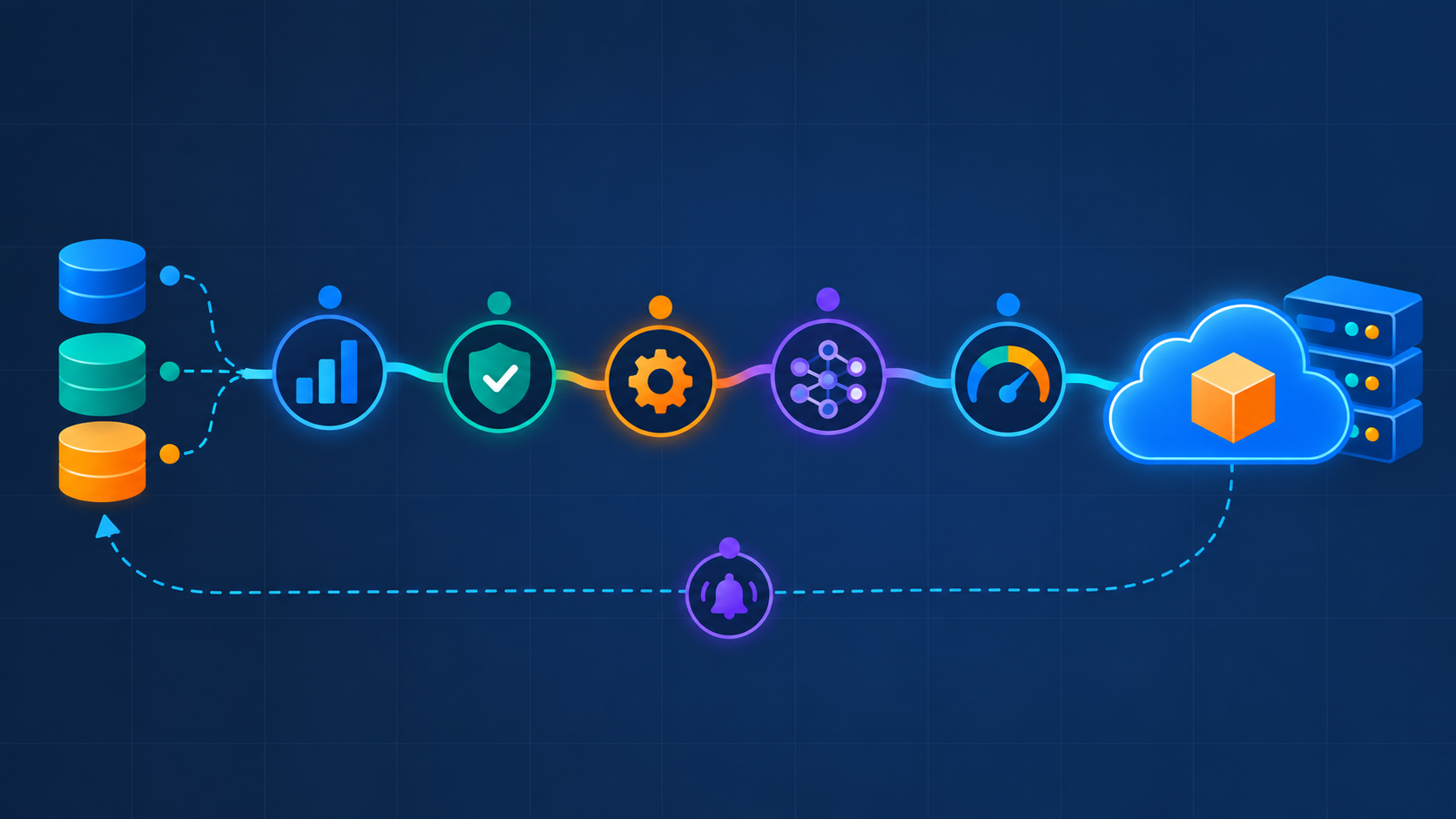
Online Course · Now on Udemy
Designing Production-Grade Deep Learning Pipelines
Take a deep learning model from a notebook to an automated, monitored production system on Google Cloud — with TFX pipelines, Vertex AI, evaluation-gated deployment, automatic retraining, and CI/CD.
By The Numbers
What the work has produced
Measured against baselines, delivery cycles, and funded outcomes — not against activity.
$14M
CAD in Research Proposals
Contributed to proposals for large-scale, AI-driven freight and logistics research
~40%
Faster Deployment
Through reproducible, production-grade TFX pipelines on Google Cloud
~90%
Training Efficiency Gain
Through optimization-based tuning and parallelized search
23
AI Systems Built
Agents · Deep Learning · MLOps · Open-Source
7+
Peer-Reviewed Publications
ML · Complex Systems · Risk Intelligence
Gold Medal
Governor General of Canada
Top graduate student · McMaster 2025
Vanier
Canada Graduate Scholar
NSERC · Top doctoral researchers nationally
Let's Work Together
Let's build something that matters!
I take on applied AI and machine learning engagements — from framing the problem and building the model, through deploying it as a system your team can run without me. If you have a decision that depends on predicting risk in a complex system, I’d like to hear about it.